How to Garden for Longer Without Overdoing It

A day in the garden is good for the soul. Fresh air, birdsong and the quiet pride of a tidy bed or a basket of homegrown vegetables. But gardening is also surprisingly hard work. Kneeling, bending, lifting and carrying all add up, and it's easy to lose track of time when you're enjoying yourself.
The secret is pacing. Here's how to spread the effort out, so you can enjoy the garden today and still feel up for a walk tomorrow.
Warm up before you dig
Gardening uses your whole body, so think of it like any other activity. Before you start, take five minutes to walk around the garden, roll your shoulders, circle your ankles and gently swing your arms. Looking at what needs doing is a perfect excuse for a slow lap.
Break big jobs into small ones
Instead of weeding every bed in one go, do one bed today and another tomorrow. Big jobs feel much easier in short bursts. Try working for 20 to 30 minutes, then stopping for a drink and a sit-down. Set a timer on your phone if you tend to forget.
Swap tasks often
Doing the same thing for hours on end can leave you feeling stiff afterwards. Mix it up. Do some weeding, then some watering, then some pruning at standing height. Changing position every so often means no one part of you is doing all the work.
Look after your knees
So much gardening happens close to the ground. A few simple things can make it more comfortable:
- A thick kneeling pad, or a kneeler with handles to help you get up and down.
- A low stool, so you can sit rather than kneel or crouch.
- Raised beds, or pots on a bench, to bring the work up to you.
- Getting up slowly, one knee at a time, using a handle, a sturdy chair or the edge of a raised bed.
Use tools that do the work
Long-handled tools let you weed and dig while standing more upright. Tools with thick, padded grips are kinder to your hands. Keep blades sharp, because a sharp tool needs less effort. A garden trolley or a wheelbarrow saves carrying heavy bags and pots around.
Lift smart
When you lift something, bend your knees and keep the load close to your body. Don't twist while you're carrying something heavy. Turn your feet instead. Split big bags of compost into smaller loads, or ask someone for a hand. There's no shame in it, and it's far better than doing too much in one go.
Drink, eat and mind the sun
It's easy to forget to drink when you're busy. Keep a bottle of water nearby and stop for a proper lunch. Garden in the cooler parts of the day when you can, and wear a hat and sunscreen. A shady chair in a good spot makes the breaks something to look forward to.
Plan the week, not just the day
Gardens don't need everything done at once. Write a short list of jobs for the week and spread them out. Put the heavier jobs, like digging or moving pots, on different days. Fill the gaps with lighter ones, like deadheading or sowing seeds. Your garden will still look lovely, and you'll enjoy it more.
Wind down when you finish
Before you settle onto the sofa, take a slow walk around the garden to admire your work. Then do a few gentle stretches, have a warm shower and put your feet up for a while. You've earned it.
Know your limits
Gardening should leave you pleasantly tired, not struggling the next day. If you often feel worn out after a session, try shorter sessions and more breaks. And if something doesn't feel right, or you're unsure what's safe for you, have a chat with your GP or physio.
A little support for busy days
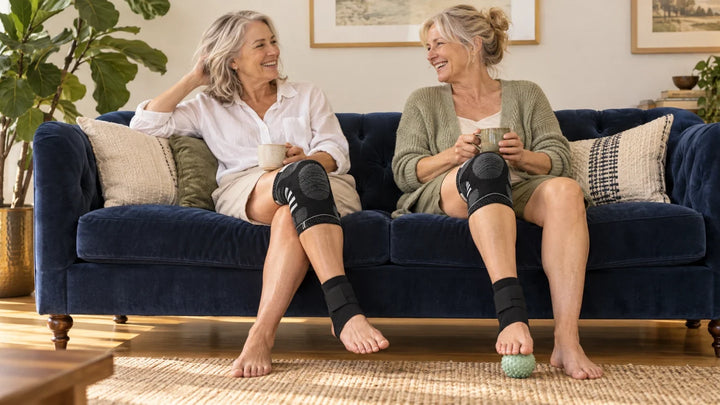
A knee sleeve isn't only for walks. If your knees tend to feel stiff or achy after a busy day at home, it can be handy in the garden too. The Easy Miles knee sleeve gives a snug, supported feel while you potter about. It's slim, it pulls on like a sock, and its silicone grip band helps it stay in place as you move.
Happy gardening. And remember: the weeds will still be there tomorrow.